
A complete guide to how it works, where it helps, and why homeowners across the Capital Region are switching.
Whether you’re insulating a new build or sealing up an old attic, spray foam offers airtight protection, lower energy bills, and long-lasting comfort.
What Is Spray Foam Insulation?
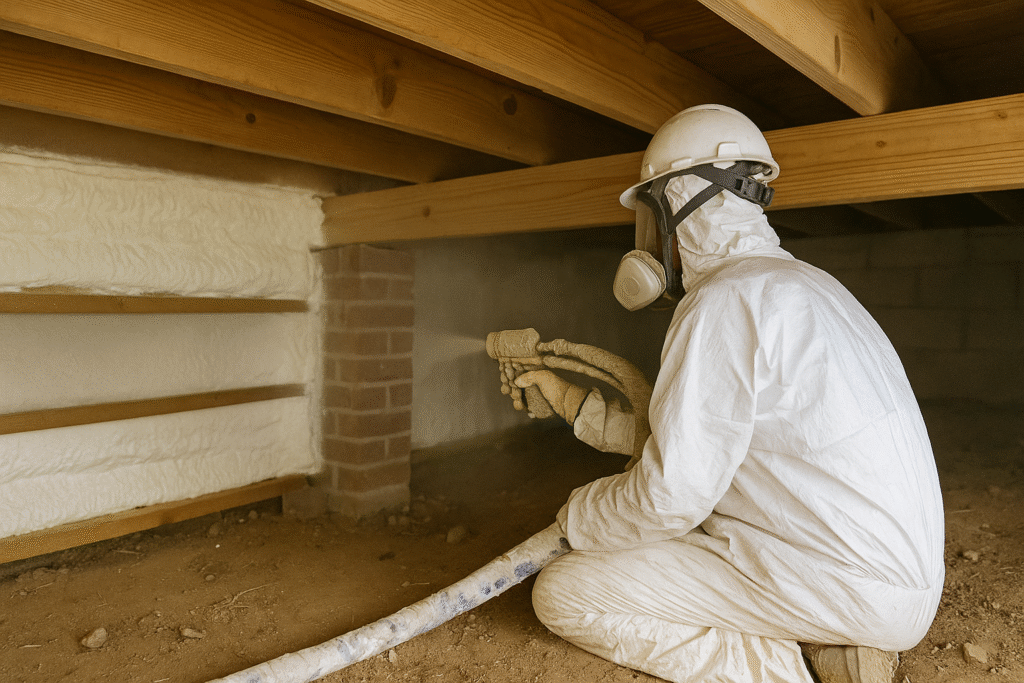
Spray foam insulation is a two-part liquid that expands into a solid, creating an airtight seal. Unlike fiberglass batts or cellulose, spray foam fills gaps, cracks, and irregular spaces—making it ideal for hard-to-reach areas and older homes.
It comes in two main types:
• Open-cell: Softer, more flexible, slightly less dense—great for interior walls and sound control.
• Closed-cell: Denser and more rigid—excellent for structural support, moisture resistance, and extreme climates
Key Benefits of Spray Foam
Where It’s Used
Spray foam works in a wide range of residential and light commercial spaces, including:
Spray Foam vs. Fiberglass
Spray foam costs more upfront—but saves money every month for decades.
|
Feature |
Spray Foam |
Fiberglass |
|---|---|---|
|
Seals gaps? |
Yes |
No |
|
R-value per inch |
High |
Medium |
|
Resists mold & pests |
Yes |
No |
|
Adds structural strength |
Yes |
No |
|
Cost upfront |
Higher |
Lower |
|
Long-term savings |
High |
Moderate |
The cost of spray foam insulation depends on:
We’ll give you a detailed quote with zero pressure.

Frequently Asked Questions

Ready to Insulate Smarter?
We’ll walk you through your options, inspect your space, and give you a detailed quote with zero pressure. Homeowners in Albany, Troy, Schenectady, and Saratoga trust us for reliable results—now it’s your turn.